Thursday, August 6, 2020

Push Back on the "New Normal"


This will not end until we make it end.


Like many of you, I was a good sport when this health scare started. I even wrote and recorded a dopey song in support of the effort.


Snow was on the ground then and, like Coleridge’s Winter, we wore on our smiling faces a dream of Spring.


But, as many have noted, “Flatten the curve” quickly became “Communism.”


The analogy is imperfect, since what we are experiencing is not strictly political, or even cultural, but the point is clear.


The first time I encountered the phrase “New Normal” in this context, I bristled. Perhaps you did, too. It was early days then, and we were being asked to take precautions to keep ourselves healthy in order to prevent hospitals from being overrun.


It was a simple request, straightforward in its logic. A comfortable generation like ours, relative strangers to true suffering and digitally deprived of much of the human contact of ages past, eagerly embraced the opportunity to help.


But then someone, in print or in person, let slip that the supposedly short-term strangeness we were enduring would be the “New Normal.”


Whoever that person was for me, or for you, I doubt they were part of some Fauci-worshipping cabal, accidentally revealing The Master Plan.


Even so, they were not wrong. Perhaps they understood the human need for conformity, or were adapting Newtonian laws – objects in lockdown tend to stay in lockdown – but here we are.


Recall, also, that in those days we were benighted as to the nature of the disease and feared the mortality rate could be as high as 3 or 4 percent. Since then, we have found the death rate to be a witheringly small fraction of that number, while making progress in understanding and treatment.


And yet, some of the brightest among us are bike-riding in masks and advocating keeping schools closed indefinitely, even as the near-zero risk to children and people outdoors are among the many valuable things we have learned.


These are not logical acts, and it took some effort to get us here. It will take more effort to get us out. This is why I say we must push back now.


Push, I say – not strike or hit. Besides that we have seen quite enough anger and violence lately, we are dealing with something that does not respond to force.


Since the Garden of Eden, mankind has demanded control – first of one’s self, and then of others. This appetite is insatiable. And it is this primal desire that prompts one to don a flimsy surgical mask in the sunshine, and then insist others do so as well.


We all contain this hardwiring, though it is more pronounced in some than others. Moreover, we all aspire to some higher good and we yearn for the warm, hearth-like glow that comes from being part of the group.


Perhaps you have seen, as I have, decent people, who have heretofore expressed little to no religious fervor, suddenly posting their solemn commitments to mask-wearing all over social media. You may also have encountered the more aggressive, profanity-laced admonitions that you wear one, too.


This is our controlling and collectivist impulse in its most observable form. I would only add that the occasional spasms of rage you may also have seen, where those questioned or chided for not wearing masks have blown a gasket, are related. The same nerve is being touched – the need for control.


But it is the former group – the mask-wearers and enforcers (masks being a proxy for the entire shutdown mindset, you understand) – that has the power and momentum. Indeed, as the logic of their case weakens, their reach seems to expand, providing further proof that they are impervious to anger and epistemology.


How, then, does this end? Can you imagine a day when your neighborhood birder, out with her binoculars, mask, and social distance tape measure, eschews the latter two and admits all is well?


If a vaccine were developed, have you any doubt that in today’s climate, proof of inoculation will be required for travel, work, or even the most basic of daily activities?


Certainly not, so what to do?


The answer is a firm but loving No. Some force must act upon this motion to stop it. In our permissive age, we keep No stored way up high, like Galliano at the back of the bar (because really, how often does someone order a Harvey Wallbanger?), but the time has come.


The No can take many forms – withholding dollars, votes, and support from businesses and politicians that perpetuate this cycle – or simply refusing to accept the conversational premises of a friend or family member who insists we all must get used to the “New Normal.”


The No should be as kind as possible – push, do not hit – and it should be accompanied by a better option. Remember that those opposed, while they are behaving differently from you, are no worse. They long to be included and on the side of goodness. Literally or figuratively, invite them to sit by your hearth instead.


There is an opportunity cost to all this, and peace will be disturbed.


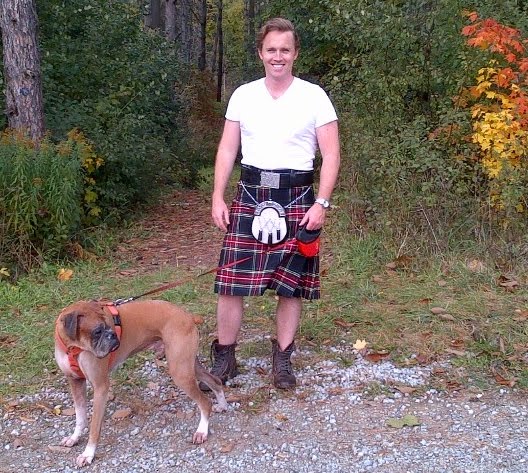
I do not want to write columns or engage in public debate. I simply want to be a good neighbor, walk my dog, and show God’s love to people I find objectionable. Those are the things I believe I was put on this planet to do.


To paraphrase Lenin, however, while I may not be interested in the “New Normal,” the “New Normal” is interested in me.


When people I like and respect, young and in glowing health, say they have stopped attending church in order to minimize their contact with other people, something must be said.


I believe this current situation – on a cultural, political, and human level – is, as abolitionist James Russell Lowell said of his own generation, that “Once to every man and nation” moment to decide.


If we do not push back now, this will indeed be our “New Normal.” Generations yet unborn will never know a day when they can simply go about in freedom, unmasked, unchipped, without proof of inoculation against some illness that was moderated years before.


As we have seen, fear, anger, and lust for power are within us. But, as the only good man who ever lived said, so too is the Kingdom of Heaven. Let us choose well.


Theo Caldwell just wanted to be left alone. Contact him at theo@theocaldwell.com

Saturday, October 26, 2019

Canada, Please Don't Ask Me to Take You Seriously Again


Growing up in Canada, one learns that an obligation of citizenship is to humor the nation’s delusions of grandeur.

In schools, to the extent history is still taught, Canada’s role in world events is revised to outsized proportions. Self-flattering terms like “moral superpower” are coined to imply that from the Cuban Missile Crisis to the supposed existential threat of “Climate Change,” it is Canada pulling the strings, like some benign and unfailingly polite Kaiser Soze.

One is enjoined to play along as Canada insists it is the best in the world at this or that – oftentimes in qualitative, subjective fields such as the arts. Even here, anyone with eyes to see or ears to hear or good taste to consult recognizes this is not the case. But the Canadian thing to do is nod, smile, and not object.

It is perhaps fitting that a vapid scion like Justin Trudeau should be the leader of such a nation. A country of little consequence is led by a young man who has never faced consequences.

Since he first thrust his way onto the national stage almost two decades ago at his father’s funeral, I have found Justin embarrassing. I resisted opining on him for as many years as possible, even as I knew he would one day be Prime Minister, as I imagined the topic would demean me and my listeners.

Even so, Justin proved handy for profiling purposes. To wit, if I encountered someone who did not blush at his nonsense, while I would still endeavour to love them as a fellow child of God, I’d recognize that we were simply not on the same page in life.

One cannot improve upon Ben Shapiro’s economical take: “Justin Trudeau is what would happen if the song 'Imagine' took human form and then ate a Tide Pod.”

There is nothing so trendy and insipid that you will not hear it escape Justin’s lips, pronounced as though he had alighted upon some ancient and arcane wisdom.

Again, he would seem the ideal leader for a nation constantly slathering itself with self-important fantasy like so much maple syrup.

But here we find the nostrums of complacent leftism colliding with such force that I cannot, though my passport may depend on it, pretend to take Canada seriously again.

After a single, inevitable term as Prime Minister, Justin has been returned to power, albeit with a minority government (that is, winning a plurality, but not a majority, of seats in the House of Commons).

Canadian voters have ratified Justin’s rule and his absurd behaviour. In this age of climate hysteria, female supremacy, and cultural hypersensitivity, Canada has re-elected a man who requires not one but two campaign planes, has groped, bullied and sidelined female press and colleagues, and who has, on at least three documented occasions, performed in blackface while deep into adulthood.

In short, politically correct Canada has given the ultimate privileged white male a pass on conduct that would likely cost you, gentle reader, your livelihood.

It is not as though voters can point to a record of economic or policy success to justify this result. After promising to eliminate the budget deficit by this year, Justin has ensured that overspending will continue for the foreseeable future. He and his fellow-travelers have not been friends to industry and there seems no end to the number of Canadian jobs they are prepared to sacrifice to the gods of their weather religion.

Again, Justin requires two planes while you cannot have a plastic straw.

All this being said, I love Canada, as a place to live. I hold three citizenships, enabling me to reside in about thirty countries, but I chose to return home and purchase the house in which I grew up.

But let it not be misunderstood – the splendidness of Canada is not due to Justin’s good offices, or the shrill politics of the frowny-faced moon maidens who support him. Rather, the nation lives on the capital of a society established before any of us got here.

From coast to coast to coast, the country is like one vast, holiday camp from reality. Canada is much like the Shire – if it were criminal to misgender a hobbit.

The whole proposition is a race against time. Will this generation pass before Canada is hollowed out by rapacious non-entities like Justin and his ilk, or will the cloud of their smugness and silly-bears consume us all?

Either way, perhaps it is best for Canada not to be taken seriously rather than just enjoyed. As Alan Watts opined, “Man suffers only because he takes seriously what the Gods made for fun.”

Theo Caldwell is a Canadian, Irish, and American citizen. Contact him at  theo@theocaldwell.com

American Thinker

Saturday, October 6, 2018

Democrats and Keyser Soze

Related image

 
“The greatest trick the devil ever pulled,” advised Keyser Soze, “was convincing the world he didn’t exist.”
 
One of the best lines in movie history, uttered by the recently un-personned Kevin Spacey in his Oscar-winning turn in The Usual Suspects, it has the benefit of being true.
 
Not to plot-spoil for readers who have not found time in the past quarter-century to see this 2-hour tour de force, the twist of the tale is that, not only does the devil very much exist, he takes the form you would least suppose.
 
That is, he feigns weakness, innocence, and vulnerability, even as he exercises wickedness, power, and control.
 
The trouble for Democrats in recent days is that their disguise has become transparent.
 
If it seems this dialectic equates the Democrat Party with the devil himself, then you are following aptly.
 
Millions of us are neither hard-core Republicans nor diehard Trump fans, but we know we could never join with the Left in general or the Democrats in particular.
 
This is because we see the Democrats as the party of partial-birth abortion (and selling dismembered baby parts thereafter), relentlessly sexualizing children who make it into the world, incessantly dividing people by race, purveyors of lies and profanity, hateful accusers of Christianity and traditional mores, control addicts and tormentors of those who dissent, the political arm of the angry mob.
 
We rarely say as much in public or out loud. Differences arise on this issue or that, but declarative statements identifying Democrats with metaphysical evil are generally left to the firebrands of the Right, or religious types who specialize in talking that way.
 
But the conduct of Democrats, not only during the Brett Kavanaugh Supreme Court nomination process but in the months and years preceding, has made the correlation clear.
 
What is most dumbfounding to traditional people is the hurricane of hypocrisy and flurry of lies that surround this.
 
Nearly a half-century after the fact, it is still considered impolite or harsh to point out that Democratic Senator Ted Kennedy left a young woman to drown in a car after he drove off a bridge.
 
That act in itself is purely evil. But equally chilling is to witness the successive generations of Democrats who excuse, deny, or ignore this incident, even as they accuse their political opponents of waging “war on women.”
 
Democratic Senator Robert Byrd was an active and enthusiastic member of the Ku Klux Klan who uttered the vilest racial terms on television right up until the early years of this century. He was embraced by his party and remained safely in office until his death, even as Democrats constantly accuse the other side of racism and bigotry.
 
We are barely a year removed from a Democratic partisan stalking out a baseball diamond and expressly confirming that the people playing there were Republicans before opening fire, yet Democrats and their media fellow-travelers fret that it is Republicans whose views “could lead to violence.”
 
Which brings us to the Kavanaugh debacle.
 
From the beginning, the peculiar aspect surrounding the accusations against Kavanaugh was not that Republicans might not believe them; rather, it is that Democrats themselves do not believe them.
 
It is an odd, almost ethereal idea, rarely spoken but largely understood, that on this as on so many issues, Democrats do not believe the words and phrases they passionately deploy.
 
Everyone, Left and Right, knows this fight is about something else. The things Democrats say about Kananaugh are rhetorical weapons of opportunity, and they know it.
 
This is why narratives continue to shift, demands are ever-changing and never satisfied, and the battle rages over generalizations regarding “women” and “survivors” rather than the facts.
 
Jesus described the devil as both “a murderer” and “the father of lies.” The juxtaposition is significant, since to lie is, in essence, to murder the truth.
 
From Moses to Milton to Michael Moore, the denial of objective truth, defined and dispensed from above, has been central to the devil’s modus operandi.
 
When Democratic Senator Cory Booker congratulated one of Kavanaugh’s accusers of speaking “her truth,” he said a mouthful.
 
Barack Obama once defined sin as “Being out of alignment with my values.”
 
As a professed Christian, it is possible Obama meant the violation of immutable right and wrong, the trespassing of objective truth, which can be felt within the soul of each person, if they wish. We all have that place inside us. God lives there.
 
Given his party affiliation and public record, however, it seems more likely Obama means compromising truth and goodness as determined by himself alone.
 
On innumerable issues, from the Kavanaugh case to their newfound yet sacrosanct belief that gender is a matter of individual choice, Democrats declare things they themselves know to be untrue and, indispensable to their need to play God, insist that everyone else yield to their pronouncements.
 
Relatedly, a word about mobs: Deep within the human mind is the burning desire to control others, and to punish those who resist. This is most effectively performed as part of a mob. Essentially, that is what Twitter is for.
 
This innate need to rule and harm is tempered in those who accept they themselves are not the sole arbiters of good and evil. But within those who insist they alone determine “their truth,” anger burns, particularly at those who refuse to submit.
 
Whatever your political affiliation, you know very well that Democrat politicians would never be hounded out of restaurants, harassed in public places, have their homes surrounded and vandalized and their children mocked, as has happened to Republicans lately.
 
This particular technique of mobbing and public abuse is a staple of Castro’s Cuba and other communist regimes. In America, it was incubated on the college campus before its recent graduation to national politics. And it is a practical manifestation of the devil’s rage against the light.
 
Lies are the means to, and the purpose of, power.
 
“To learn who rules over you, simply find out who you are not allowed to criticize,” avers Voltaire. For all Democrats’ complaints about “white male privilege,” no Leftist utterance would seem complete without a swipe at white people, particularly men.
 
And who cannot be criticized? Anyone who achieves victim status. Currently, this includes Kavanaugh’s accusers, no matter how outlandish their claims.
 
Here, as in Keyser Soze’s example, brute power wears a veil of innocence and vulnerability.
 
The point is not that Democrats, in particular, are evil. All people are evil.
 
The difference is that traditional Americans, and Christians by definition, understand this about themselves and recognize the need for redemption by a higher power.
 
For Democrats, there is no higher power but power itself.
 

Image result for american thinker logo

Wednesday, February 28, 2018

Guessing Justin Trudeau's Mental Age


Not to brag, but I was embarrassed by Justin Trudeau BEFORE he went to India.

The Good Book instructs that whoever says to his brother, “You fool!” shall be in danger of hellfire, so let me address this a gentler way.

In assessing others, particularly political leaders, we tend toward familiar terms to gauge their qualities – experience, intelligence, wisdom, honesty, and so on.

Each of these is important, certainly, but to consider any one, or even several of them to be dispositive paints an incomplete picture. It is unsatisfactory.

What we are really talking about, though we rarely use the word, is a person’s essence.

Is this a person of substance? Do their values resonate and do they have the means to uphold them?

People of profound experience or nonpareil intelligence can nevertheless be badly wrong. In fact, they often are.

I do not, therefore, choose to pile on the global mockery of Trudeau’s recent India trip by dismissing him as “stupid” or “inexperienced.” Besides that such characterizations can be off-putting, or at least unhelpful, they miss the point.

Among the many weaknesses of the Conservative Party’s disastrous 2015 campaign to prevent Justin from ascending to his father’s seat as Canada’s prime minister was their ubiquitous slogan, “Just not ready.”

The implication was that the younger Trudeau was simply lacking in time served and, after a few more years of professional politics, would be all set for the big chair.

To civilians like me, pulling our hair out as we watched a winnable election slip away, this failed to address the instinct of millions of Canadians, left and right, that Justin Trudeau was not a person of educable depth.

Having inherited a family fortune and, effectively, the leadership of the Liberal Party, Justin enjoys a more privileged life than you or I ever will. As we sometimes see with children of celebrities, or those who achieve fame too young, arrested development sets in.

To wit, such people do not mature because they do not have to.

As a rough estimate, I would assess Justin a mental age of about 15.

I do not mean a precocious 15, either. In fact, I mean a particular sort of teenager, with which you might be familiar.

I mean the kid in the class who adores the sound of his own voice, who stands in awe of his own intellect, and whose overall obtuseness is obvious to everyone but himself.

He is the sort of self-promoting, mean-spirited virtue-signaller who is always leading some politically correct campaign, just so he can make a speech in assembly or get himself interviewed by the local news.

Cast your mind back to your schooldays and I bet you can picture that kid. I certainly know who it was for me (as does everyone who was in my class except, I suspect, the person himself).

If you still know that person, have they changed much?

Among the little I know of the Conservatives’ current leader, Andrew Scheer, is that he has shocked me twice: once, by winning the speakership of the House of Commons; and again by becoming head of his party.

He is younger than Trudeau, but reassuringly more mature.

Jovial and unobtrusive, Scheer seems the ideal antidote to Trudeau’s brand of electric nothingness.

In an interview on Election Night 2015, I referred to Justin Trudeau as a “ridiculous ballerina.” Without irony, I apologize for that. It’s no way to talk about people.

But as a Canadian, he wields greater power over my life than does the leader of any other free country over its citizens.

Consequently, it is in my personal interest, and that of my nation, to point out when our prime minister is fundamentally unsuited to the job.

His India debacle is just the latest, searing example that Justin Trudeau is not ready, and never will be.

One hopes our long, national facepalm is almost over.

Theo Caldwell hates to say he told you so. Contact him at theo@theocaldwell.com


Saturday, December 23, 2017

This Christmas, Try to be More Judgmental


One of my favourite expressions, which Google finds to be of disputed provenance, is "Be hard on yourself, but easy on others."

Most of us naturally tend toward the opposite.

In my case, I give myself unlimited hall passes for things much worse than I condemn others for. I have done this all my life, I’m frightfully good at it, and I doubt I will ever stop.

This comes to mind because 2017 has been the worst year of my life. Four people very close to me died within a few months of each other (the last two, 10 days apart), with a fifth passing away just before Christmas 2016.

As one does at times like these, I cast about for guidance and inspiration, which brought me to the works of 18th-century spiritualist Emanuel Swedenborg.

During his later years, Swedenborg claimed to have visited the afterlife, including both Heaven and Hell, and wrote prolifically about what he saw there.

This may seem bizarre, but Swedenborg’s books are profound and detailed, with many concepts worthy of consideration, even if the entire canon were the product of delusion.

In my nascent Swedenborg study, I have found that some Christians consider him to be a heretic, even an occultist.

Whether Swedenborg offered a legitimate interpretation of scripture or was a doctrinal arsonist and, as his contemporary John Wesley is said to have described him, "one of the most ingenious, lively, and entertaining madmen that ever set pen to paper," his prevailing message is clear.

To wit, everything we do and are, and the whole of existence, including this life and the next, is based on love.

The task for us as humans is to decide which sort of love will rule our natures – love for ourselves, or love for God and our fellow man?

In practical terms, this translates to the good things we do for others and, crucially, our reasons for doing them.

Consequently, we must judge ourselves fearlessly on what we do and why.

Personally, I do nuthin' for nobody and, the few times I actually do help my fellow man, I practically give myself a medal in my mind.

Self-interest is crafty and conniving, a master of disguise, and it adapts like a virus.

Let's say you give money to a homeless man on the street. Why are you doing it? Is it so you will be seen doing so, or even just to get him away from your car?

Are you giving to him so you yourself will experience the warm gladness of having helped someone else?

Perhaps most challenging, if you have faith in God, by giving money to that homeless man, do you believe you are increasing your chances of getting into Heaven, and adding to the treasure that awaits you there?

To the extent any of these motivations is true, you will notice what is missing: giving out of a genuine love for that other person.

Even (or especially) those last two motivations – the warm fuzzies and/or jumping the queue to Heaven – are ultimately about you.

Why, even, have I published this column? Is it (as I like to believe) because I have alighted upon something worthwhile that will benefit others?

Or is it so people will think well of me, or consider me erudite for the Dickensian reference in my bio at the bottom, and because I use words like "erudite" and "Dickensian" when I could just as easily have said "smart" and "Scrooge"?

The reason the Golden Rule is to treat others as you would like to be treated, and Christ instructs us to love others as we love ourselves (the starter kit to loving God above all things), is that this is motivation to which people can relate.

We all love ourselves first and foremost. Our assignment is to take that abiding self-love that is in the heart of every human and, so far as we are able, redirect it toward other people.

At this time of year, when crummy gifts are given (e.g., socks, fruity soaps, donations to the Human Fund), they are often ameliorated by saying, “It’s the thought that counts.”

How true that is.

Swedenborg has a particular observation pertinent to the Christmas story, which I must paraphrase (Swedenborg was Swedish and writing in Latin, so gimme a break):

The reason the wise men traveled to see the baby Jesus and laid precious gifts before him is that true wisdom bows down to the supremacy of love – in Jesus’ case, love personified.

We all like to think of ourselves as wise. I don’t know you, but you’re probably smarter than I am.

But all the wisdom in the world amounts to foolishness if it is not informed by love. Similarly, two people doing the same good deed may look identical, but the only one truly doing good is the one motivated by selfless love.

And so, my unsolicited and borrowed advice this Christmas is this: Judge yourself as thoroughly as you are able, even (and especially) when you are being easy on others.


Theo Caldwell should have made mankind his business. Contact him at theo@theocaldwell.com

https://convivium.ca/articles/the-gift-of-true-love

Tuesday, November 28, 2017

TDSB Right to Remove Cops, But for the Wrong Reasons


The presence of police officers in Toronto schools impresses two things upon students, only one of which is true.

The first, unfortunate principle is that authority and surveillance are ubiquitous. There is no boundary between government enforcement and civil society, rendering personal agency obsolete.

And the second proposition – which my mother would refer to as “bollocks on stilts” – is that cops are your friends.

As adults learn to varying degrees in their interactions with police, cops range from revenue collectors to brutal enforcers, but they are not pals.

Following the Toronto District School Board’s decision to end its School Resource Officer program, the ballyhoo broke down much as you’d expect.

The perpetually aggrieved left and reflexively pro-cop right (both of whom should re-think their positions) claimed victory and outrage, respectively. Television news reports showed footage of officers cop-spreading their way down school corridors in that distinctive, space-commanding waddle of the modern constabulary.

For once, the TDSB is correct, albeit for the wrong reasons.

In hockey terms, an ideal cop is like a good referee or an effective defenceman. If he is doing his job well, you don’t notice him.

With that in mind, cops should quit creeping into our kids’ schools, clambering onto our parade floats, and acting like we’re all on the same side.

As hundreds of innocent Toronto citizens who were abused and falsely imprisoned by police during the 2010 G20 meetings can attest, when push comes to shove, cops view citizens less as employers to serve and protect than problems to subdue.

If it seems petty to bring up that mess from 7 years ago, consider that after all this time, there has been almost no consequence for that monstrous betrayal of public trust.

The closest any officer came to that was Superintendent Mark Fenton whose punishment, after being tried and convicted, was being denied a second popsicle at the police picnic, or some such.

The modern police force is less than 200 years old, created in London in 1829 by Sir Robert Peel (from whom British police derive their moniker, “Bobbies”).

Peel’s vision was of “citizens in uniform,” a far cry from today’s aggressive, militarized officers, kitted out in what Mark Steyn calls “the full Robocop.”

Unfortunately, as so often happens when matters concerning police and the public come up, this controversy has become focused on race.

The much larger issue, which has once again been consumed by the unquenchable maw of identity politics, is the relationship between the citizen and the state.

TDSB director John Malloy congratulated race-addled opponents of the SRO program for speaking “their truth.” This is, of course, hippy-dippy modern-speak that reflects a default toward subjective reality far more damaging to students than Barney Fife roaming the halls, but that’s a topic for another day.

In spite of themselves, Malloy and the rest of his wind chimes crew got this one right.

Cops, you need to recognize that, in your line of work, less is more. There is no need for you to be everywhere, high-fiving, politicking and making yourselves conspicuous. We know you’re there.

And I certainly don’t want you near my kid at school.


Theo Caldwell walks like a giant, police defiant. Contact him at theo@theocaldwell.com
Thursday, November 9, 2017

Tax Reform is Useless to Americans Abroad


On any significant topic, every news outlet sounds more or less the same.

The headlines will be different, as will the slant of the reporting and analysis (to the extent those remain mutually exclusive nowadays), but within the body of the text, the same facts and bullet points will be repeated again and again, no matter where you get your news.

This is because, despite their towering self-regard (or perhaps because of it), journalists simply do not know very much about the world. Consequently, they copy, ape, echo, cull from wire services and one another, while almost never applying the necessary diligence to tell their audience something new.

The same is true of politicians. Members of Congress, in particular, often with limited real world experience or responsibility beyond casting one of 535 votes on issues that are largely pre-determined, have precious little understanding of what affects regular people.

Beware when you hear a politician tell you a folksy tale about someone coming up to them on the street or in the grocery store, calling them by their first name and asking them a softball, open-ended question like, “Hank, what are you going to do for me and my family?”

On an instinctual level, you know that conversation never happened – at least, not the way you are about to hear it. But, absent a genuine comprehension of what matters to normal people, politicians must conjure a composite of the average voter to make their point.

There is no better recent example of this disassociation than the noise surrounding Republicans’ recently released tax reform plan.

Regardless of how granular news outlets promise to get in their coverage of the bill, their reports will all say pretty much the same things: the corporate rate may be cut to 20 percent, deductions for mortgage interest, state and local taxes remain bones of contention, the House version must conform to the precise requirements of the Senate (here, your reporter might be slightly intrepid and insert the word “picayune”), etc., etc.

Among politicians, discussion is similarly predictable and useless. Democrats bashed the bill as being a boon for “the rich” even before it was written. Republicans are all droppin’ their g’s and sayin’ the same things about helpin’ workin’ families.

Meanwhile, literally millions of Americans around the world are looking for one, simple change in the world’s most onerous, punitive tax system. But you can read the news and listen to politicians until your eyes fall out and your ears fall off and, unless you come across this column, you will find not one word about it.

We are looking for the abolition of America’s absurd and larcenous practice of demanding taxes from its citizens living abroad.

Much is made of the reform’s repatriation of international corporate profits, and one can even hear the term “territorial tax system” uttered now and then but, on the individual side, there is no mention of liberating 7 million Americans – plus their families, business partners, various visa holders and others considered “US Persons” – from the worldwide clutches of the IRS.

If you are one of these many people and you do not live in the United States – indeed, even if you have never been to the US – the IRS requires that you nonetheless file American tax returns, along with a copy of your tax return from your country of residence, plus all your banking and investment accounts and the values thereof. Moreover, if it is deemed you would have paid more under US tax law, you are required to pay the difference, as well.

This is the very definition of taxation without representation.

To those of us affected, this outrage is nothing new. But to listen to journalists and politicians banging on about “tax reform,” it is as though we do not exist.

In a dozen years advocating on this issue, I have encountered precisely one politician who understands it: former Congressman Mick Mulvaney (R-SC), who currently serves as President Trump’s Budget Director.

Senior as Mulvaney’s position is, the OMB Director does not write legislation.

Certainly, after I explain the problem, politicians have expressed generic concern but, for all the action I have seen, I just get rolled into the amalgam of their made-up grocery store guy.

Every quarter, a new record is set for the number of Americans renouncing their citizenships. The reason we know this is the US Treasury Department publishes these people’s names in a petty attempt to shame them for opting out of an unjust system.

The institutional assumption is that these former Americans have done something ignoble that should be brought to light. In fact, the opposite is true: It is unbecoming a nation that styles itself the “land of the free” to make financial prisoners of its citizens.

Until it liberates millions of people who neither live in America nor make use of its services, and who have already paid their taxes elsewhere, this supposedly simpler, fairer tax reform is nothing of the kind.


Theo Caldwell is a dual American-Canadian citizen living in Toronto. Contact him at theo@theocaldwell.com